Selftution Whats New ?

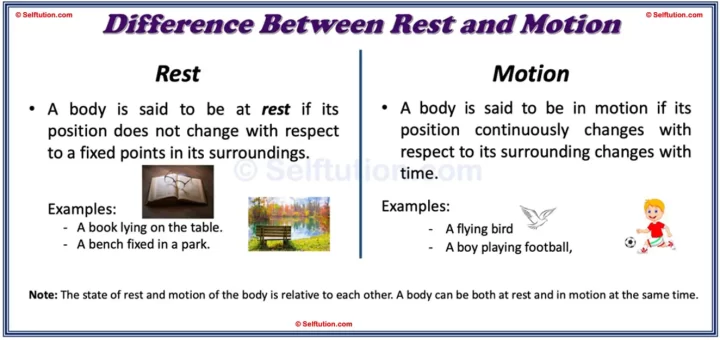
Difference between rest and motion with examples. A body is said to be at rest if its position does not change with respect to its surroundings. Whereas, when the position of a body changes with respect to its surroundings, it is said to be in motion.

Difference Between Rest and Motion With Examples

Rest vs Motion: Key Differences Explained with Real-Life Examples | Selftution.com Discover the clear distinction between rest and motion with simple definitions, practical examples, and easy-to-understand diagrams. At Selftution.com – the best educational website for students...

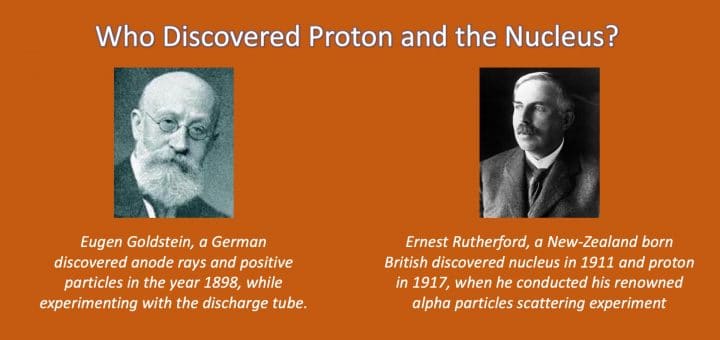
Who Discovered Proton and the Nucleus? Eugen Goldstein, a German discovered anode rays and positive particles in the year 1898, while experimenting with the discharge tube. Ernest Rutherford, a New-Zealand born British discovered nucleus in 1911 and proton in 1917, when he conducted his renowned alpha particles scattering experiment.

Who Discovered Proton And The Nucleus?

Who Discovered the Proton and the Nucleus? – Key Scientists, Experiments & Breakthroughs Uncover the groundbreaking discoveries of the proton and atomic nucleus – from Rutherford’s gold foil experiment to Chadwick’s findings. At Selftution.com,...

The Mission To Mars | Stories For Kids

Welcome to Selftution.com – the best educational website for kids, where fun and engaging stories like ‘The Mission to Mars’ make learning exciting and easy. The story – “The Mission to Mars“, a fiction,...

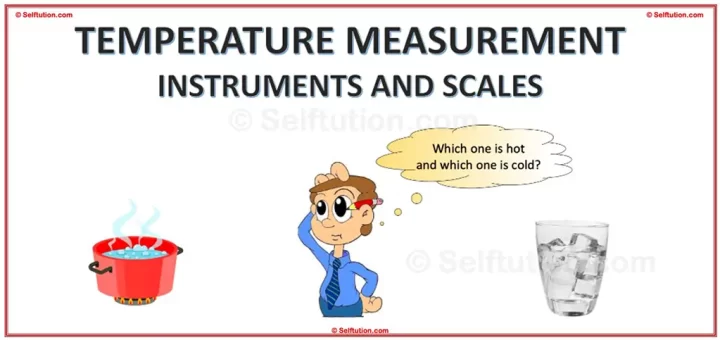
Temperature Measurement and Instrument for measuring temperature

Temperature Measurement: Instrument and Scales

Master Temperature Measurement: Essential Instruments, Scales & Conversions Explained | Selftution.com Selftution.com is the best educational website for clear, simplified learning. Discover thermometers, Celsius vs Fahrenheit, Kelvin scale, and practical examples – all in one...

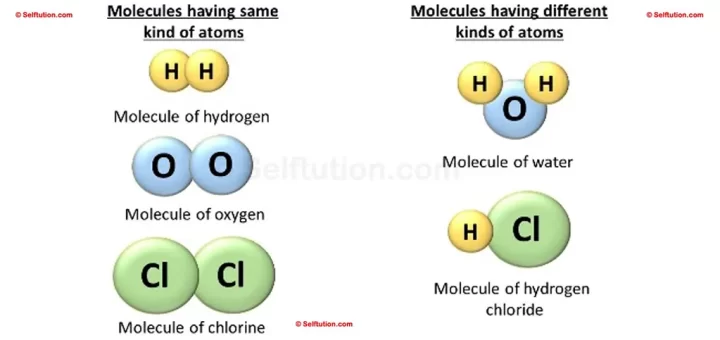
Molecules of elements and compounds

Elements and Compounds | Simplified for kids

Elements and Compounds Explained for Kids – Fun, Simple & Engaging! Discover the difference between elements and compounds with easy examples, colorful diagrams, and interactive quizzes – only on Selftution.com, the best educational website for clear, kid-friendly...