United Nations Agencies: Intro to the 15 Specialized Agencies
Understanding the United Nations (UN) Agencies is vital for students who want simple, clear knowledge about global cooperation.
At www.selftution.com, learning becomes easier with well-structured notes, student-friendly explanations, and exam-focused content.
Choose Selftution for trusted guidance, smarter study, and improved understanding of international topics.
So, let’s begin.
The United Nations (UN) is an international organization that works to bring peace, cooperation, and development to the world.
In our earlier blog on the Six Main Organs of the United Nations, we learned about the basic structure of the UN.
- General Assembly (UNGA),
- Security Council (UNSC),
- Secretariat (UNS),
- Economic & Social Council (ECOSOC),
- International Court of Justice (ICJ), and
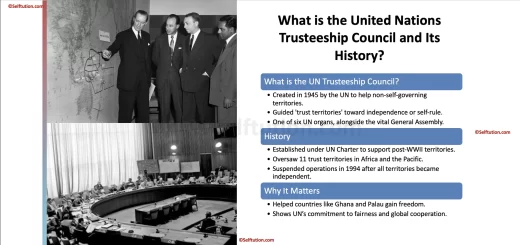
- Trusteeship Council,
However, the UN is much bigger than just those six organs.
It also has many other parts that focus on different areas of life, such as health, education, money, food, and science.
These are special groups that focus on specific problems around the world, like health, food, and education. They work closely with the UN but have their own ways of doing things.
The United Nations agencies are like branches of a big tree, each handling a different job. They were created after World War II to fix global issues that no single country can solve alone.
Unlike the main organs, these agencies are independent but report to the UN. They help in areas like farming, travel, money, and weather.
By learning about these United Nations agencies, you’ll see how the UN touches our daily lives. Let’s start with what they are and then look at each one.
List of 15 Specialized United Nations Agencies
What Are Specialized United Nations (UN) Agencies?
The United Nations Agencies are international organizations connected to the UN through agreements. They are independent, but they report to the UN and help it achieve its mission. Each agency has its own rules, budget, and membership.
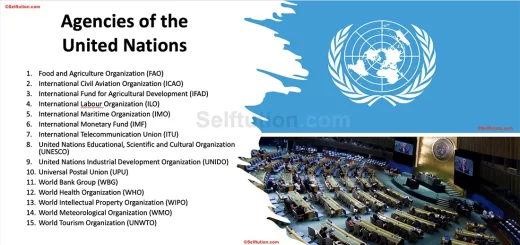
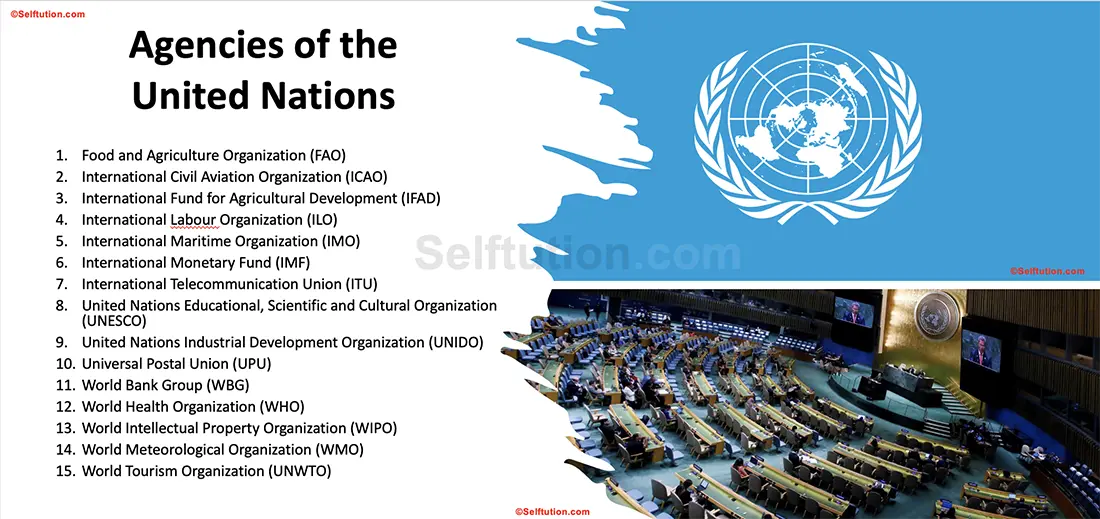
The UN currently works with 15 Specialized Agencies, and each one focuses on an important issue such as health, food, education, or banking. The list is below:
- Food and Agriculture Organization (FAO)
- International Fund for Agricultural Development (IFAD)
- World Health Organization (WHO)
- International Labour Organization (ILO)
- United Nations Educational, Scientific, and Cultural Organization (UNESCO)
- International Monetary Fund (IMF)
- World Bank Group (WBG)
- International Civil Aviation Organization (ICAO)
- International Maritime Organization (IMO)
- International Telecommunication Union (ITU)
- Universal Postal Union (UPU)
- United Nations Industrial Development Organization (UNIDO)
- World Meteorological Organization (WMO)
- World Intellectual Property Organization (WIPO)
- United Nations World Tourism Organization (UNWTO)
Let us now look at each one in detail.
United Nations (UN) Agencies for Food and Farming
1. Food and Agriculture Organization (FAO)
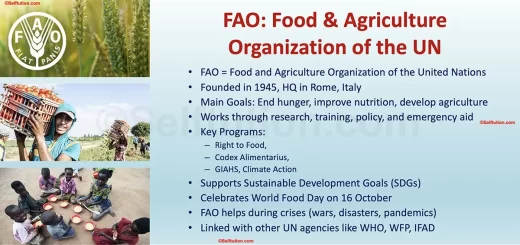
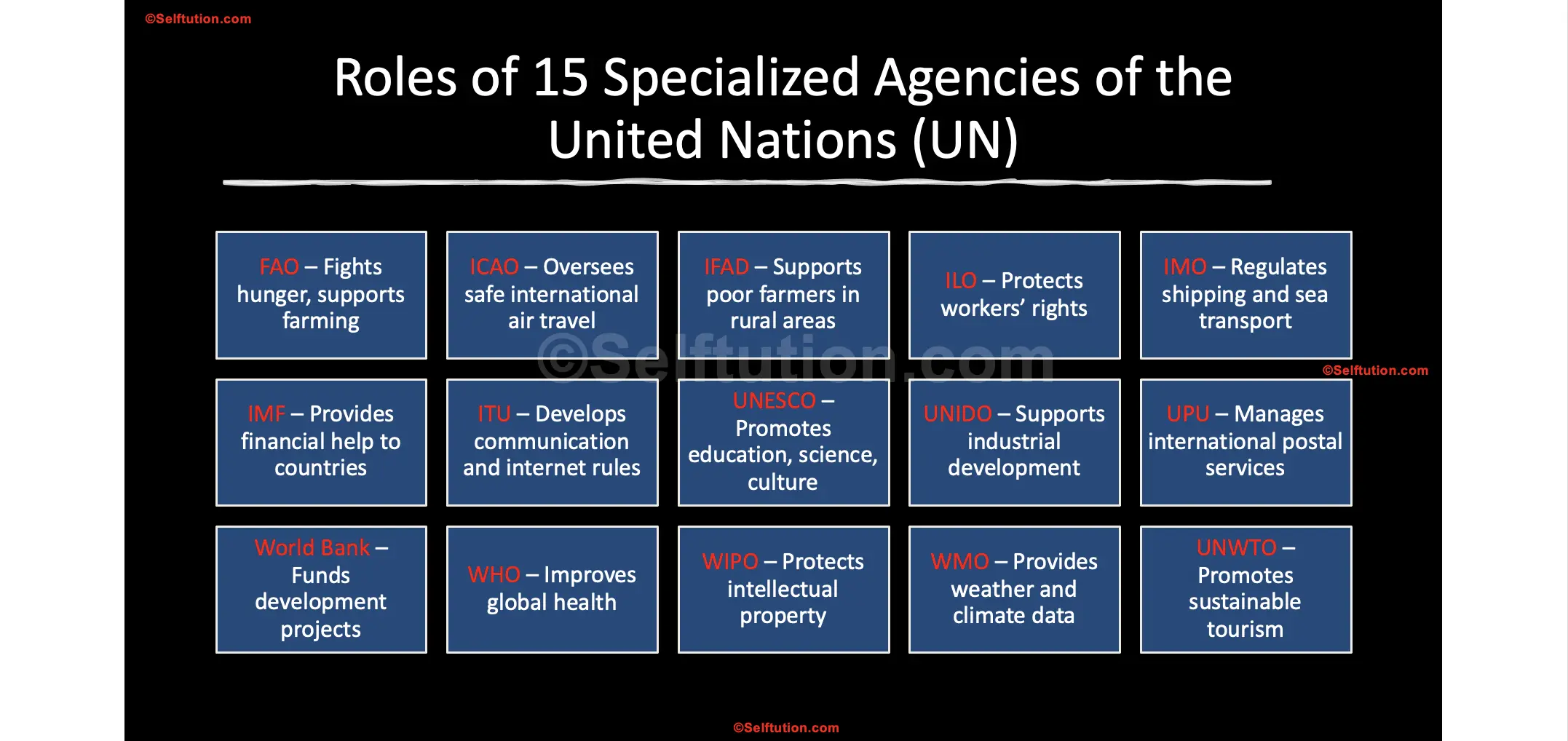
The Food and Agriculture Organization, or FAO, is one of the top United Nations agencies for fighting hunger. Based in Rome, Italy, it helps countries grow better food and make sure everyone has enough to eat. Imagine a world where farmers in poor areas learn new ways to plant crops that survive droughts – that’s what FAO does. They teach about healthy soil, fishing rules, and animal care. Started in 1945, FAO works with governments to stop food waste and help during famines. For students, think of FAO as the UN’s farmer friend, making sure no child goes hungry at school.
2. International Fund for Agricultural Development (IFAD)
Another key player among United Nations agencies is the International Fund for Agricultural Development, or IFAD. Also in Rome, IFAD gives money and ideas to small farmers in developing countries. They focus on poor villages where people grow food but struggle with bad weather or no tools. IFAD loans help buy seeds or build wells for water. Since 1977, this agency has lifted millions out of poverty by teaching women and young people farming skills. It’s like a bank for farmers, linking back to the UN’s goal of ending hunger, just like in our blog on the main organs.
Roles of United Nations Agencies
United Nations (UN) Agencies for Health and Well-Being
3. World Health Organization (WHO)
The World Health Organization, known as WHO, is a famous United Nations agency for health. Headquartered in Geneva, Switzerland, the WHO fights diseases and promotes good health worldwide. During pandemics like COVID-19, the WHO gives advice on vaccines and safety rules. They help countries build hospitals and train doctors. Started in 1948, the WHO aims to make everyone healthy, no matter where they live. For 8th to 10th graders, picture WHO as the world’s doctor, checking on global health and stopping sickness from spreading, supporting the UN’s peace efforts.
4. International Labour Organization (ILO)
The International Labour Organization, or ILO, is among the oldest United Nations agencies, founded in 1919 but joining the UN later. Based in Geneva, it focuses on jobs and workers’ rights. The ILO makes rules so kids don’t work in dangerous places and adults get fair pay. They help end child labor and promote safe factories. Think of the ILO as the UN’s job guardian, ensuring work is fair and helps families. This ties into the UN’s human rights from the main organs blog, showing how agencies make those rights real.
United Nations (UN) Agencies for Education and Culture
5. United Nations Educational, Scientific, and Cultural Organization (UNESCO)
UNESCO is a vital United Nations agency for learning and culture. In Paris, France, it protects famous places like the Taj Mahal and promotes schools for all kids. Started in 1945, UNESCO helps countries teach science and history better. They fight fake news and save old books. For students, UNESCO is like a global teacher, making sure education reaches every corner, linking to the UN’s goal of smart, peaceful people.
United Nations (UN) Agencies for Money and Development
6. International Monetary Fund (IMF)
The International Monetary Fund, or IMF, is a key United Nations agency for money matters. In Washington, D.C., USA, it helps countries with economic problems by lending money and giving advice. When a nation has too much debt, the IMF steps in to fix it. Founded in 1944, the IMF watches global trade to prevent crashes. It’s like the UN’s money doctor, ensuring economies grow fairly, which supports the Security Council’s peace work.
7. World Bank Group (WBG)
The World Bank Group is another important United Nations agency for building better lives. Also in Washington, D.C., it gives loans for roads, schools, and clean water in poor countries. Started in 1944, the World Bank fights poverty by helping nations develop. For young readers, think of it as a big helper that turns ideas into real projects, like new bridges or farms, extending the UN’s development beyond the main organs.
United Nations (UN) Agencies for Travel and Transport
8. International Civil Aviation Organization (ICAO)
ICAO is a specialized United Nations agency for air travel. Based in Montreal, Canada, it sets rules for safe flying worldwide. They make sure planes don’t crash and airports work well. Founded in 1944, ICAO helps during emergencies, like volcanic ash clouds. It’s like the UN’s sky traffic cop, keeping travel safe and linking countries peacefully.
9. International Maritime Organization (IMO)
The International Maritime Organization, or IMO, handles sea travel as a United Nations agency. In London, UK, it prevents ship pollution and accidents. Started in 1948, IMO trains sailors and protects ocean life. Picture IMO as the ocean guardian, making sure goods like toys and food reach us safely.
United Nations (UN) Agencies for Communication and Technology
10. International Telecommunication Union (ITU)
ITU is a United Nations agency for phones and the internet. In Geneva, it shares radio waves so countries don’t interfere. Founded in 1865 but UN-linked later, ITU helps poor areas get online. It’s like the UN’s tech connector, bringing the world closer.
11. Universal Postal Union (UPU)
The Universal Postal Union, or UPU, is a simple United Nations agency for mail. In Bern, Switzerland, it makes sure letters cross borders easily. Started in 1874, the UPU sets stamp rules. For kids, it’s the mail master, keeping global letters flowing.
United Nations (UN) Agencies for Industry and Environment
12. United Nations Industrial Development Organization (UNIDO)
UNIDO is a United Nations agency for factories and jobs. In Vienna, Austria, it helps countries build clean industries. Founded in 1966, UNIDO promotes green tech. It’s like the UN’s builder, creating work without harming nature.
13. World Meteorological Organization (WMO)
WMO is a United Nations agency for weather. In Geneva, it predicts storms and studies the climate. Started in 1950, WMO shares data to save lives. Think of it as the weather watcher, warning about floods.
14. World Intellectual Property Organization (WIPO)
WIPO protects ideas as a United Nations agency. In Geneva, it guards inventions and songs. Founded in 1967, WIPO helps creators earn from their work. It’s the idea protector, encouraging new things.
United Nations (UN) Agencies for Tourism
15. United Nations World Tourism Organization (UNWTO)
UNWTO is the last on our list of United Nations agencies, focusing on travel fun. In Madrid, Spain, it promotes safe tourism. Started in 1970, UNWTO helps create jobs from visits. It’s like the vacation planner, making tourism good for all.
Why United Nations Agencies Matter Today
In conclusion, these 15 specialized United Nations agencies show how the UN goes beyond its six main organs: the United Nations General Assembly (UNGA), the United Nations Security Council (UNSC), the United Nations Secretariat (UNS), the United Nations Economic & Social Council (ECOSOC), the International Court of Justice (ICJ), and the United Nations Trusteeship Council, to solve real problems. From food to weather, they touch every part of life. By working together, United Nations agencies build a better world for you and me. Remember, just like the main organs make rules, these agencies make them happen. Keep learning, and maybe one day you’ll join one!
You may also like…... Types of Chemical Reactions in Chemistry