United Nations Secretariat: Its Roles and Objectives
United Nations Secretariat – Roles, Functions, and Importance Explained | Selftution.com
What is the United Nations Secretariat, and how does it function? Get a clear, in-depth breakdown of its roles, powers, and global impact – only on Selftution.com, the #1 educational website for simplified learning.
Welcome to Selftution.com – where complex global institutions like the UN are made easy to understand!
The United Nations (UN) is a large global organization working to maintain peace, assist people, and address global problems. At the heart of this team is the United Nations Secretariat (UNS), which acts as the backbone for all UN activities.
In this blog, we’ll delve into the role of the United Nations Secretariat, its significance, and its place within the broader context of the UN. We’ll keep things straightforward so anyone can follow along.
The UN has six main organs, each with its own job. Among them, the General Assembly stands out as one of the most important. It’s where all member countries meet to discuss and decide on global issues.
The other organs include the Security Council (UNSC), the Economic and Social Council (ECOSOC), the Trusteeship Council, the International Court of Justice, and the Secretariat itself. Together, they make the UN run smoothly.
What is the United Nations Secretariat?
What is the United Nations Secretariat
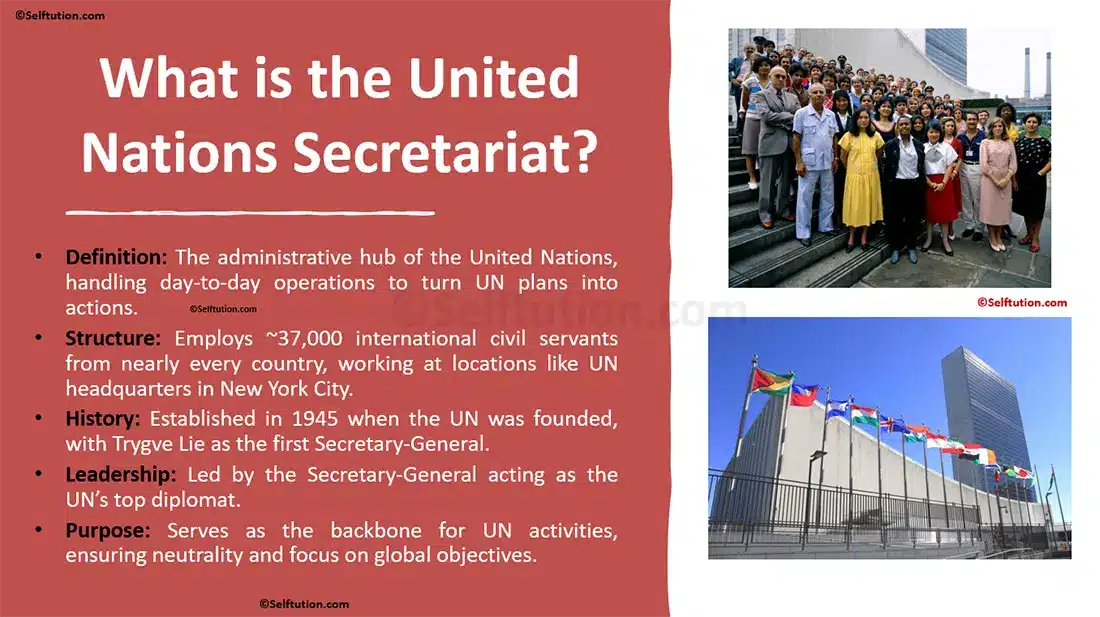
The UNS is the office that handles the day-to-day work of the UN. Think of it as the administrative hub where plans turn into actions. It’s made up of thousands of staff from around the world who work in offices like the UN headquarters in New York City.
History of the United Nations Secretariat
The idea for the United Nations Secretariat came about after World War II. Leaders wanted a better way to prevent wars and promote cooperation. In 1945, when the UN was founded, the Secretariat was created as one of its key parts. Its first leader, called the Secretary-General, was Trygve Lie from Norway. Over the years, the United Nations Secretariat has grown to handle more complex global challenges, like climate change and pandemics.
Today, the Secretariat employs about 37,000 people from nearly every country. These staff members are international civil servants, meaning they work for the UN, not their home governments. This helps them stay neutral and focus on global good.
Key Roles of the United Nations Secretariat
The United Nations Secretariat has many roles that keep the UN functioning. It’s like the engine in a car – without it, nothing moves forward. Let’s break down some of its main responsibilities.

Roles of the United Nations Secretariat
Administrative Support for UN Organs
One big role of the United Nations Secretariat is to provide support to the other UN organs. For example, it organizes meetings for the United Nations General Assembly, which is one of the most important organs where all 193 member states have a voice. The Secretariat prepares reports, translates documents into six official languages (Arabic, Chinese, English, French, Russian, and Spanish), and makes sure everything runs on time.
It also helps the United Nations Security Council (UNSC) by gathering information on conflicts and suggesting ways to resolve them. Without this support, these organs couldn’t make decisions effectively.
Peacekeeping Operations
The United Nations Secretariat plays a crucial part in peacekeeping. When there’s trouble in a region, like a civil war, the UN might send peacekeepers – soldiers and experts who help maintain calm. The Secretariat plans these missions, hires the right people, and monitors progress. Currently, there are over a dozen peacekeeping operations worldwide, from Africa to the Middle East, all managed by the Secretariat.
This role shows how the United Nations Secretariat turns ideas from the General Assembly or Security Council into real-world actions.
Research and Analysis
Another important job is doing research. The United Nations Secretariat collects data on global issues like poverty, health, and the environment. It then analyzes this information and shares it with UN members. For instance, during the COVID-19 pandemic, the Secretariat helped coordinate global responses by providing updates and advice.
This research helps the UN make smart choices. It’s like being the brain that thinks ahead for the whole organization.
Public Information and Outreach
The United Nations Secretariat also spreads the word about UN work. It runs websites, social media, and events to tell people what’s happening. This outreach educates everyone, from world leaders to everyday folks, about goals like sustainable development.
By doing this, the Secretariat builds support for UN initiatives and encourages countries to join in.
Coordinating Specialized Agencies
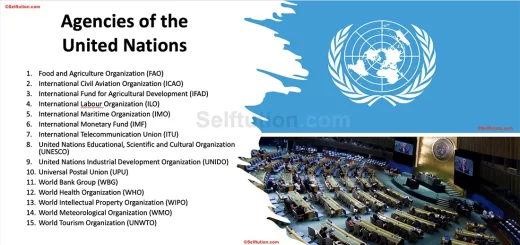
Beyond its work with the main organs, the United Nations Secretariat has a key role in managing and coordinating the UN’s 15 specialized agencies. These agencies are like expert branches that focus on specific areas, such as health, education, or finance. The Secretariat ensures they align with the overall UN goals and work together without overlapping too much.
For example, the Secretary-General leads the Chief Executives Board for Coordination (CEB), where heads of these agencies meet to share plans and solve common problems. The United Nations Secretariat provides administrative help, like budgeting and reporting, to keep everything efficient. This coordination is vital because issues like climate change or poverty often need input from multiple agencies.
Here are the 15 specialized agencies the Secretariat helps manage:
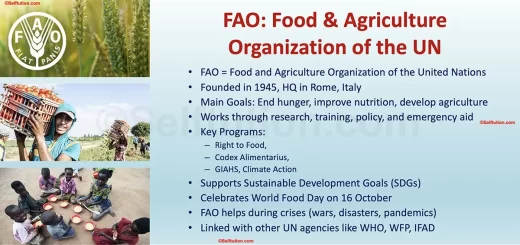
- Food and Agriculture Organization (FAO) – focuses on ending hunger.
- International Atomic Energy Agency (IAEA) – promotes safe nuclear energy.
- International Civil Aviation Organization (ICAO) – sets rules for air travel.
- International Fund for Agricultural Development (IFAD) – helps the rural poor.
- International Labour Organization (ILO) – improves workers’ rights.
- International Maritime Organization (IMO) – ensures safe shipping.
- International Monetary Fund (IMF) – stabilizes global economies.
- International Telecommunication Union (ITU) – coordinates telecom tech.
- United Nations Educational, Scientific, and Cultural Organization (UNESCO) – protects culture and education.
- United Nations Industrial Development Organization (UNIDO) – boosts industry in developing countries.
- United Nations World Tourism Organization (UNWTO) – promotes sustainable tourism.
- Universal Postal Union (UPU) – improves postal services worldwide.
- World Health Organization (WHO) – leads global health efforts.
- World Intellectual Property Organization (WIPO) – protects inventions and art.
- World Meteorological Organization (WMO) – studies weather and climate.
Through this role, the UNS makes sure these agencies contribute to bigger UN objectives, like the Sustainable Development Goals, creating a united front against global challenges.
Objectives of the United Nations Secretariat
The United Nations Secretariat isn’t just about doing tasks; it has clear objectives that guide its work. These goals come from the UN Charter, the founding document of the organization.

Objectives of the United Nations Secretariat
Promoting International Peace and Security
A top objective is to help maintain peace. The Secretariat works to prevent conflicts by talking to countries and offering mediation. It supports the Security Council in imposing sanctions or authorizing force when needed, but always as a last resort.
This objective ties back to why the UN was created – to stop wars like the ones in the 20th century.
Advancing Human Rights and Development
The UNS aims to protect human rights everywhere. It monitors situations where rights are violated and reports to the Human Rights Council. It also pushes for development, like reducing hunger through programs such as the Sustainable Development Goals (SDGs).
For example, the Secretariat helps poorer countries build better schools and hospitals, making the world fairer.
Fostering Global Cooperation
Cooperation is key. The United Nations Secretariat encourages countries to work together on issues that affect everyone, like climate change. It organizes big conferences, such as the annual climate summits, where leaders agree on plans.
This objective ensures that no country is left behind in solving shared problems.
Ensuring Efficiency and Neutrality
Finally, the Secretariat’s objectives include being efficient and neutral. Staff must follow high standards, avoiding bias. This builds trust in the UN as a whole.
The Secretary-General: Head of the United Nations Secretariat
No discussion of the United Nations Secretariat is complete without mentioning the Secretary-General. This person leads the Secretariat and is like the UN’s top diplomat. The current Secretary-General is António Guterres from Portugal, who started in 2017.
The Secretary-General is chosen by the General Assembly on the recommendation of the Security Council. They travel the world, meet leaders, and speak out on urgent issues. For instance, they’ve urged action on global warming and refugee crises.
Under their guidance, the United Nations Secretariat becomes more effective in achieving its roles and objectives.
How the United Nations Secretariat Fits into the Bigger UN Picture
While the UNS is vital, it’s just one piece of the puzzle. Remember, the United Nations General Assembly (UNGA) is one of the most important organs because it represents all members equally. It discusses everything from budgets to new memberships.
The United Nations Security Council focuses on threats to peace, with five permanent members (the USA, Russia, China, the UK, and France) holding veto power. The Economic and Social Council tackles issues like education and health. The Trusteeship Council, though less active now, once oversaw territories gaining independence. The International Court of Justice settles legal disputes between countries.
Each organ relies on the others, and the Secretariat connects them all. If you’re curious about these, check out our other blogs: “The Power of the UN General Assembly” for democratic discussions, “Inside the UN Security Council” for peace enforcement, “Economic and Social Council: Building a Better World” for development focus, “The Role of the Trusteeship Council in History” for past achievements, and “International Court of Justice: Global Justice Explained” for legal insights. Together, these blogs give a full view of the UN’s six organs.
Why the United Nations Secretariat Matters Today
In today’s world, with challenges like wars in Ukraine and Gaza, or climate disasters, the UNS is busier than ever. It coordinates aid, negotiates ceasefires, and pushes for solutions. For young people, understanding this helps them see how global teamwork can make a difference.
By supporting the General Assembly and other organs, plus managing the specialized agencies, the Secretariat ensures the UN’s voice is heard. Its roles in peacekeeping, research, coordination, and more, plus objectives like promoting peace and rights, show its impact.
In summary, the United Nations Secretariat is the unsung hero of the UN. It turns big ideas into actions, helping create a safer, fairer world. As we face future uncertainties, its work will only grow more crucial.
You may also like…... Types of Chemical Reactions in Chemistry