United Nations Trusteeship Council: A Simple Guide
The United Nations (UN) Trusteeship Council was a principal organ of the UN, established to oversee the administration of trust territories and ensure their path towards self-government and independence.
Its work is a fascinating, largely completed chapter in history. In this guide, we break down its purpose, functions, and legacy clearly and simply.
Welcome to Selftution.com – your source for straightforward educational content.
The United Nations (UN) is a global organization that works to maintain peace, promote cooperation, and solve international problems.
It has six main organs, each with a unique role. Among these, the United Nations Trusteeship Council is one that often gets less attention today, but played a vital role in the past.
In this blog, we’ll explore what the Trusteeship Council is, its history, purpose, and why it matters.
We’ll also touch on how it connects to other parts of the UN, like the General Assembly, which is one of the most important of the six organs, and how it links to other UN bodies and specialized agencies.
What is the United Nations Trusteeship Council?
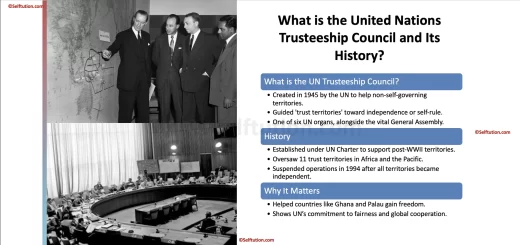
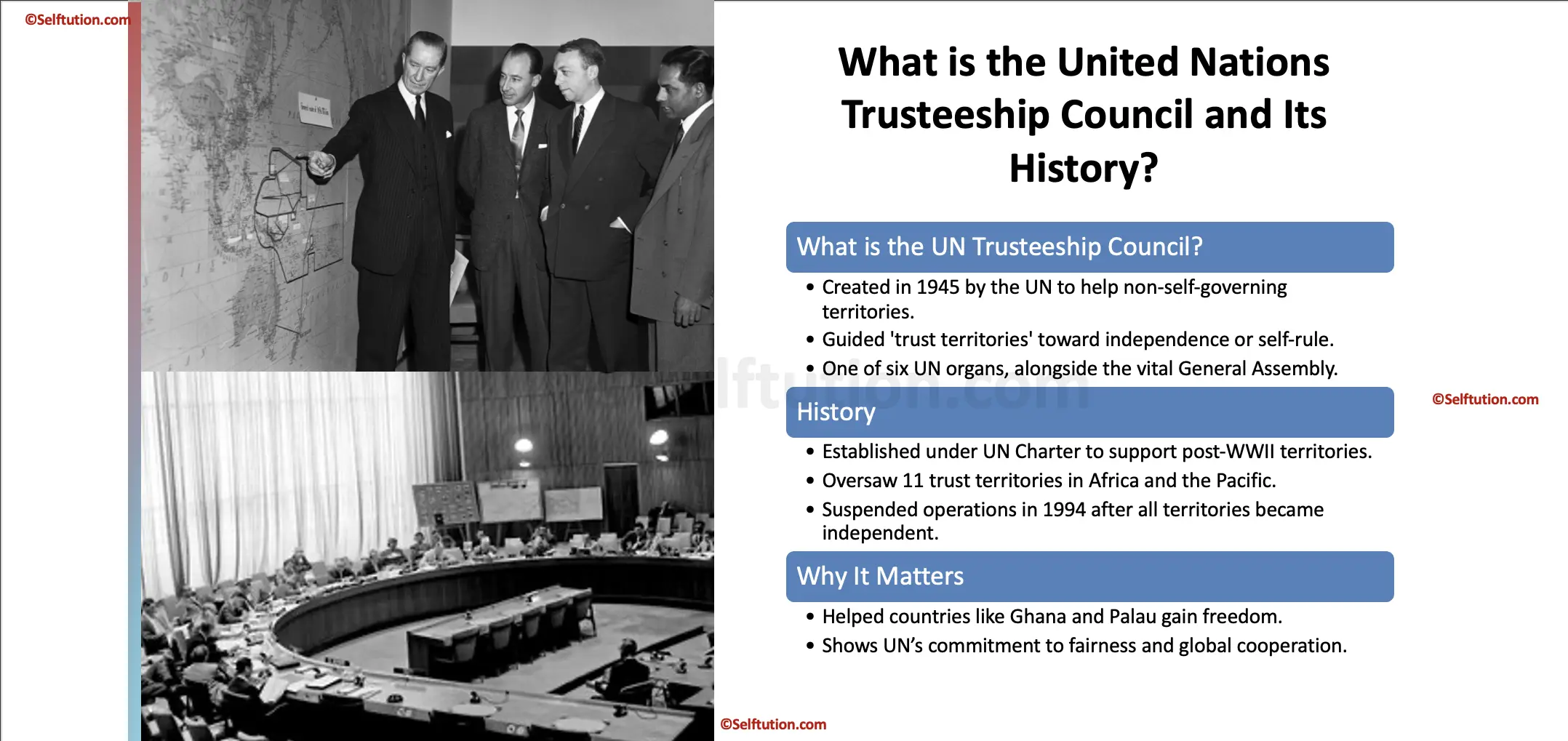
The United Nations Trusteeship Council was created in 1945 when the UN was founded. Its main job was to help territories that were not self-governing – places that were under colonial rule, occupied after World War II, or needed support to become independent nations. These territories were called “trust territories.” The Council made sure these areas were governed fairly and helped them move toward self-governance or independence.
Think of the Trusteeship Council as a guide, like a teacher helping a student learn to stand on their own. It worked to ensure that the countries managing these territories (called administering powers) treated the people there with respect and prepared them for independence.
What is the United Nations Trusteeship Council
Why Did the UN Create the Trusteeship Council?
After World War II, many regions remained under foreign control. The United Nations Trusteeship Council, established under Chapter XIII of the UN Charter, supervised these areas to promote peace and self-determination. It focused on political, economic, and social progress.
The Council was one of six UN organs, including the General Assembly (UNGA), Security Council (UNSC), Economic and Social Council (ECOSOC), International Court of Justice (ICJ), and Secretariat. The General Assembly, representing all 193 member states, stands out as the most important, addressing global issues like those once handled by the Trusteeship Council.
The Role and Functions of the Trusteeship Council
The United Nations Trusteeship Council had clear tasks:
It monitored trust territories to ensure fair treatment.
It reviewed reports from administering countries on progress in education, health, and development.
It listened to locals through petitions, giving them a voice.
It sent representatives to visit territories and check conditions.
These efforts helped many territories, like Ghana, Somalia, and Palau, gain independence.
How Did the Trusteeship Council Operate?
The United Nations Trusteeship Council included:
Countries managing trust territories include the United States and the United Kingdom.
Permanent Security Council members, such as China and Russia.
Other UN members are elected by the General Assembly for balance.
The Council met to discuss reports, assess progress, and make suggestions. It followed the UN Charter to support trust territories.

Roles and Functions of the United Nations Trusteeship Council
The Success of the United Nations Trusteeship Council
The United Nations Trusteeship Council achieved great success. It started with 11 trust territories, mostly in Africa and the Pacific. By 1994, all became independent or joined other nations freely. Palau, the last trust territory, gained independence in 1994, completing the Council’s main work.
With no territories left, the Council suspended operations in 1994. It still exists in the UN structure and could restart if new trust territories emerge.
Why Is the Trusteeship Council Inactive Today?
Since no trust territories remain, the United Nations Trusteeship Council has no active role. Some suggest it could oversee climate-affected areas or support small nations. Others believe its work is done, with the General Assembly and Economic and Social Council taking over similar tasks.
The General Assembly, the UN’s most crucial organ, discusses human rights, development, and peace issues once tied to the Trusteeship Council. Read our blog on “The United Nations General Assembly: The Voice of the World” for more.
Connecting the Trusteeship Council to Other UN Organs
The United Nations Trusteeship Council worked closely with other UN organs. The General Assembly, the heart of the UN, elected Council members and reviewed its reports. Learn more in our blog “The United Nations General Assembly: The Voice of the World.”
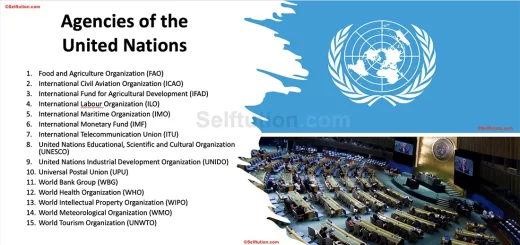
The Economic and Social Council (ECOSOC) supported trust territories, collaborating with 15 specialized agencies like the World Health Organization (WHO) and UNESCO. These agencies continue to improve health and education globally. Check out our blogs “The Role of ECOSOC in Global Development” and “Exploring the 15 Specialized Agencies of the UN.”
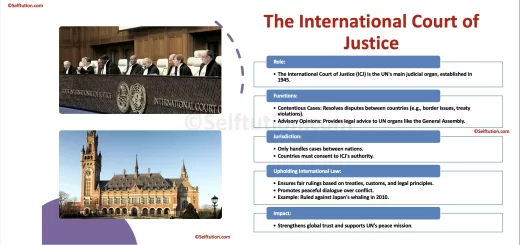
The Security Council oversaw “strategic” trust territories vital for global security. Explore its role in our blog “The UN Security Council: Guardians of Peace.” The International Court of Justice and Secretariat also supported the Council’s legacy by resolving disputes and managing UN operations. Read more in “The International Court of Justice: Justice on a Global Scale” and “The UN Secretariat: The Backbone of the UN.”
Why the Trusteeship Council Still Matters
Though inactive, the United Nations Trusteeship Council left a lasting impact. It helped 11 territories become independent, showing the power of global cooperation. Its work reflects the UN’s commitment to fairness, a value continued by the General Assembly.
Understanding the Council helps you see how the UN shaped today’s world. Countries like Namibia and Micronesia gained independence partly due to their efforts. Its story ties to UN goals like peace and human rights, explored in our blogs on other UN organs and agencies.
Conclusion: The Legacy of the United Nations Trusteeship Council
The United Nations Trusteeship Council guided 11 territories to independence. Though it no longer operates, its legacy lives in the nations it helped free. The General Assembly, the most important UN organ, continues its mission of global cooperation.
Explore our blogs on the other five UN organs – General Assembly, Security Council, Economic and Social Council, International Court of Justice, and Secretariat. Also, learn about the 15 specialized agencies, like the WHO and UNESCO. These posts will show how the UN works to improve the world.
You may also like…... Types of Chemical Reactions in Chemistry