World Health Organization: What It Does and Why It Matters
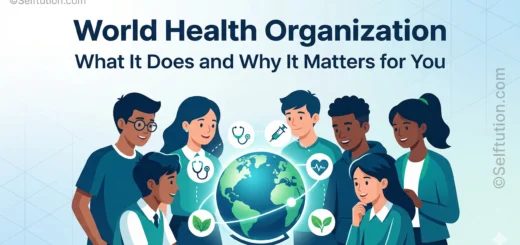
The World Health Organization works to keep every person on Earth healthy. It is the leading global health agency that fights diseases, sets health standards, and saves millions of lives every year.
Selftution.com makes learning about organizations like this easy and fun, so you can understand the world around you in clear, simple steps.
How It All Began
The World Health Organization was founded on 7 April 1948. That date is now celebrated every year as World Health Day. It operates as a specialized agency of the United Nations, which means it works closely with governments across the globe.
The organization has its headquarters in Geneva, Switzerland. Furthermore, it has six regional offices spread across different continents, including one for South-East Asia, which directly serves countries like India, Bangladesh, and Nepal. As a result, its reach extends to nearly every corner of the planet.
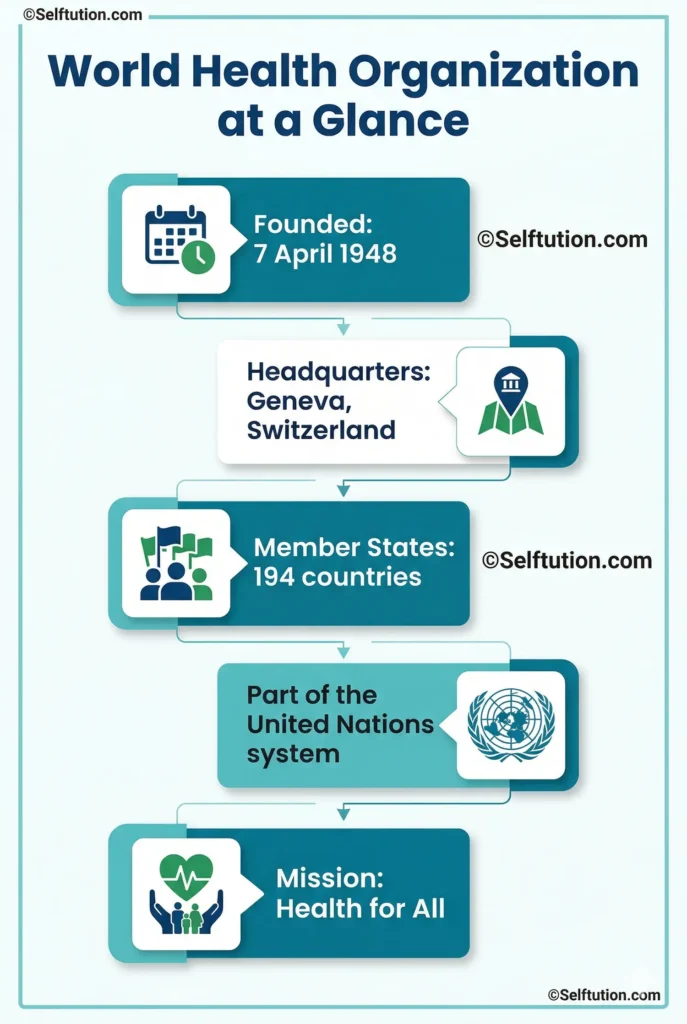
Today, this global body has 194 member states. Therefore, almost every country in the world works together under its guidance to protect and improve public health. You can read more about this global body directly on the official WHO website.
What Does This Global Health Agency Actually Do?
Many students wonder what a global health agency like this actually handles on a daily basis. The answer covers a wide range of tasks that touch every human life.
First, the organization monitors and responds to disease outbreaks. For example, it led the global response to COVID-19, Ebola, and SARS. Additionally, it works on disease prevention by creating vaccination programmes that have wiped out deadly illnesses like smallpox.
Second, it sets international health standards. For instance, the food safety rules your school cafeteria follows are partly based on guidelines this global body develops. Similarly, it approves medicines and vaccines that countries can trust as safe and effective.
Third, it supports countries with weak healthcare systems by providing funding, training, and medical supplies. Consequently, even poorer nations can give their citizens access to basic healthcare.
How It Connects to the United Nations
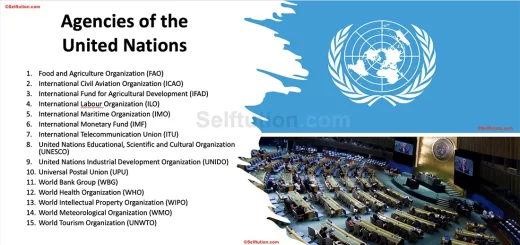
The World Health Organization is one of 15 specialized agencies that operate under the United Nations system. You may already know about the United Nations from your social studies class. However, understanding how health fits into this system helps you see the bigger picture.
The UN created this health body because global health problems do not stop at borders. For example, a virus that starts in one country can spread worldwide within weeks. Therefore, nations need a shared body to coordinate their response. The United Nations itself explains this connection clearly.
You can also learn more right here on Selftution.com through our guides on the United Nations history and objectives and the 15 specialized agencies of the United Nations.
Why Global Health Matters for Students Like You
You might think global health is a topic only for doctors or politicians. However, it affects your daily life in more ways than you might expect.
The water you drink, the vaccines you received as a child, and the safety standards for the food you eat — all of these connect to the work of the World Health Organization. Additionally, issues like air quality, mental health awareness, and access to clean sanitation are all part of its public health agenda.
Furthermore, understanding global health helps you become a more informed citizen. Our article on five types of environmental pollution connects directly to the environmental health goals this organization champions.
Key Goals of the World Health Organization
This agency runs on a principle it calls “Health for All.” This means every person, regardless of where they live or how much money they have, deserves access to quality healthcare.
To reach this goal, it focuses on three core areas:
- Universal Health Coverage — ensuring all people get the health services they need without financial hardship.
- Health Emergencies — preparing countries to detect, prevent, and respond to disease outbreaks quickly.
- Healthier Populations — promoting healthy behaviours, clean environments, and strong nutrition.
Consequently, its work connects strongly to topics like ecosystems, pollution, and nutrition. For example, deforestation and environmental damage directly affect disease spread — explore this in our post on deforestation and its effects on the environment.
How the World Health Organization Fights Disease
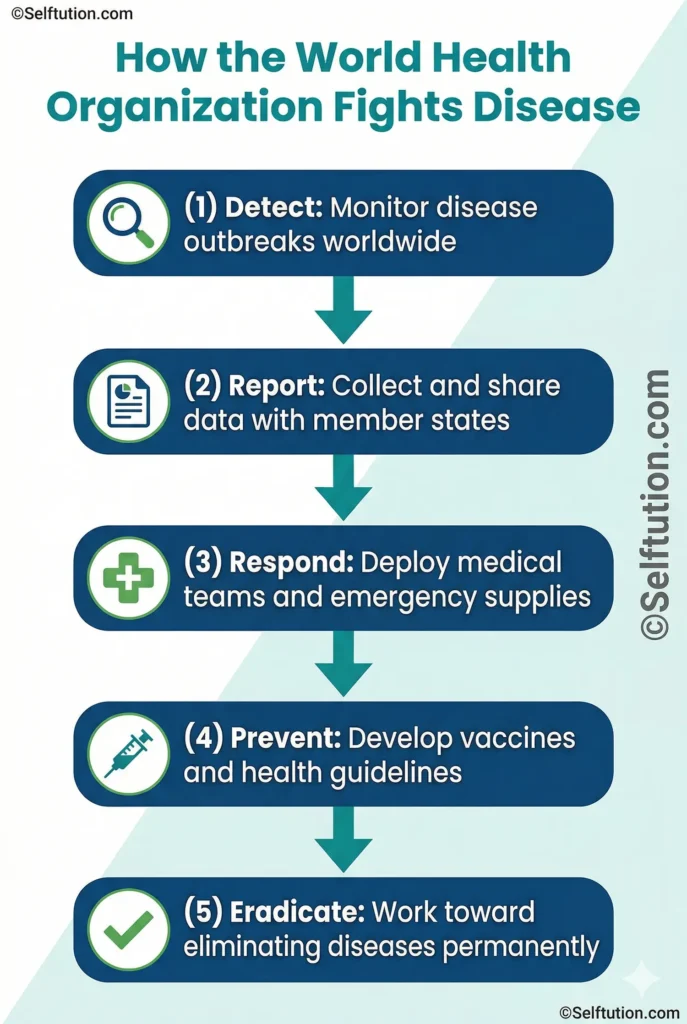
One of the most impressive achievements of this global health body is eradicating infectious diseases. For example, it led the campaign that completely wiped out smallpox in 1980. As a result, smallpox became the first human disease in history to disappear entirely.
Moreover, the organization manages the Global Influenza Surveillance and Response System. This system monitors flu viruses year-round and helps scientists develop the right vaccines each season. Therefore, the flu shot your doctor recommends relies on data this global health agency collects.
Additionally, the World Health Organization plays a major role in fighting non-communicable diseases like diabetes, heart disease, and cancer. To understand more about living things and their responses to the environment, check out our posts on characteristics of living and non-living things and classification of living things.
When Disasters Strike: The Role of This Global Body
This organization steps in when natural disasters strike. For example, after an earthquake or flood, healthcare systems often collapse. Hospitals get damaged, clean water becomes scarce, and diseases like cholera can spread rapidly.
Therefore, the organization sends emergency medical teams and supplies to affected areas within hours. Furthermore, it coordinates with other United Nations agencies and governments to make sure aid reaches people who need it most.
Natural disasters and their health effects are closely connected topics. You can explore the science of these events in our article on natural disasters, types, examples, and precautions.
World Health Organization and Artificial Intelligence
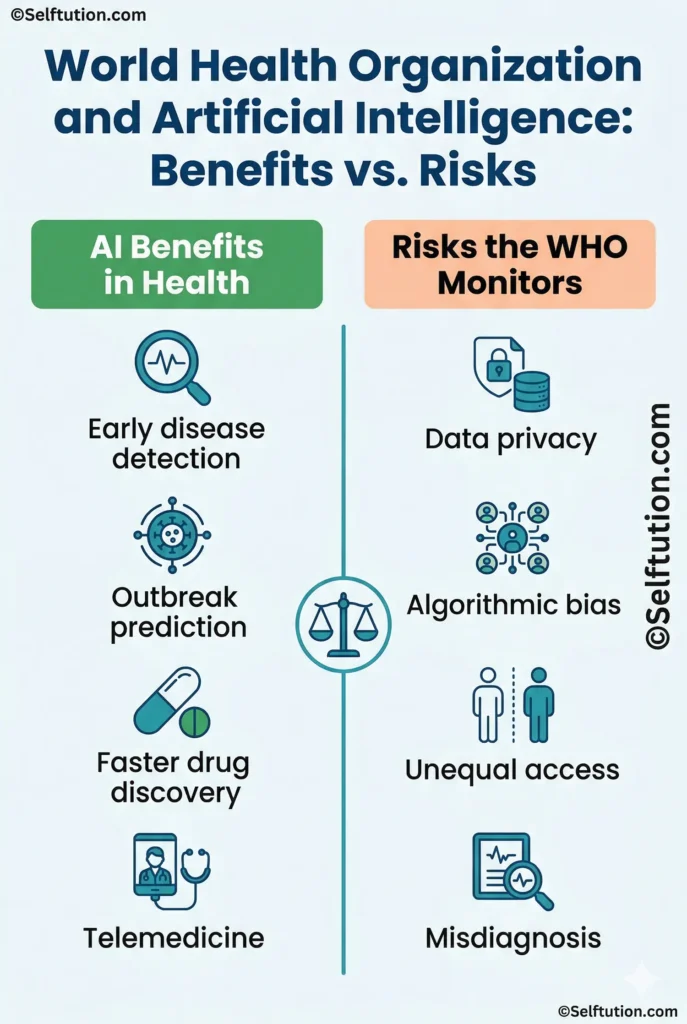
In recent years, the World Health Organization has also started to explore how artificial intelligence can improve global health. For example, AI tools help doctors detect diseases earlier by analysing medical images faster than ever before. Additionally, machine learning models help predict where disease outbreaks are likely to happen next.
However, the organization also issues guidance on using AI responsibly in healthcare, making sure patient privacy and safety always come first. You can discover more in our student-friendly guide on artificial intelligence and machine learning for kids.
Frequently Asked Questions About Global Health
What is the World Health Organization in simple words?
It is a United Nations agency that works to protect and improve health for people all over the world. It fights diseases, sets health standards, and helps countries respond to health emergencies.
When was this organization founded?
It was officially founded on 7 April 1948. This date is celebrated every year as World Health Day across the globe.
How many countries are members?
Currently, 194 countries are members, making it one of the most widely joined international organizations in the world.
What are the main goals of the World Health Organization?
Its three main goals are universal health coverage, responding to health emergencies, and building healthier populations through disease prevention and environmental action.
How does this global body affect students?
The vaccines children receive, the safety of food and water, and the health guidelines schools follow are all shaped by the work of this global health body. It creates the conditions that allow young people to grow up healthy and safe.