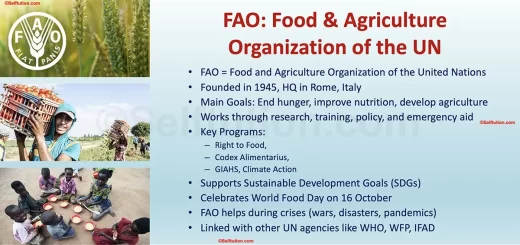
FAO: Food & Agriculture Organization of the United Nations
What is the FAO? Learn about the UN Food & Agriculture Organization – Selftution
Confused by the complexity of international bodies? Selftution.com exists to make learning clear and simple.
Explore our straightforward guide to the United Nations FAO’s history, structure, and key objectives.
So, let’s begin
The Food and Agriculture Organization of the United Nations (FAO) is one of the most important agencies of the UN.
It works for food, farming, and ending hunger. The United Nations FAO is very important because, without food, no person or country can survive.
In this blog, we will learn about the Food and Agriculture Organization, its work, history, goals, and how it helps people all around the world.
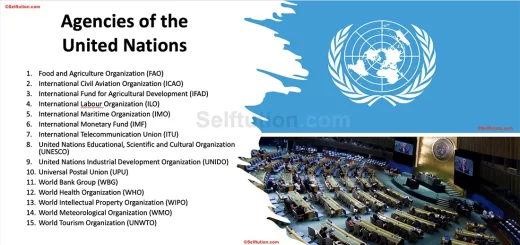
This blog is also a continuation of the earlier topics “Six Main Organs of the United Nations” and “15 Specialized United Nations Agencies”, where FAO was introduced as one of the agencies. Now, let us understand FAO in detail.
What is FAO?
FAO is a special part of the United Nations that focuses on food and farming. Think of FAO as a global helper that works to stop hunger and make sure people everywhere can get good, healthy food. The Food and Agriculture Organization helps countries grow better crops, raise animals, and protect nature while doing it.
FAO started as an idea to bring nations together for better food production. It is one of the 15 specialized United Nations agencies we talked about in our previous blog. Unlike the main organs of the UN, like the General Assembly or the Security Council, FAO deals specifically with agriculture and nutrition. This makes it unique because it connects directly to everyday needs, like what we eat.
FAO has its main office in Rome, Italy, and works in more than 130 countries. It has 195 members, including 194 countries and the European Union. These members work together to share ideas and solve problems related to food.
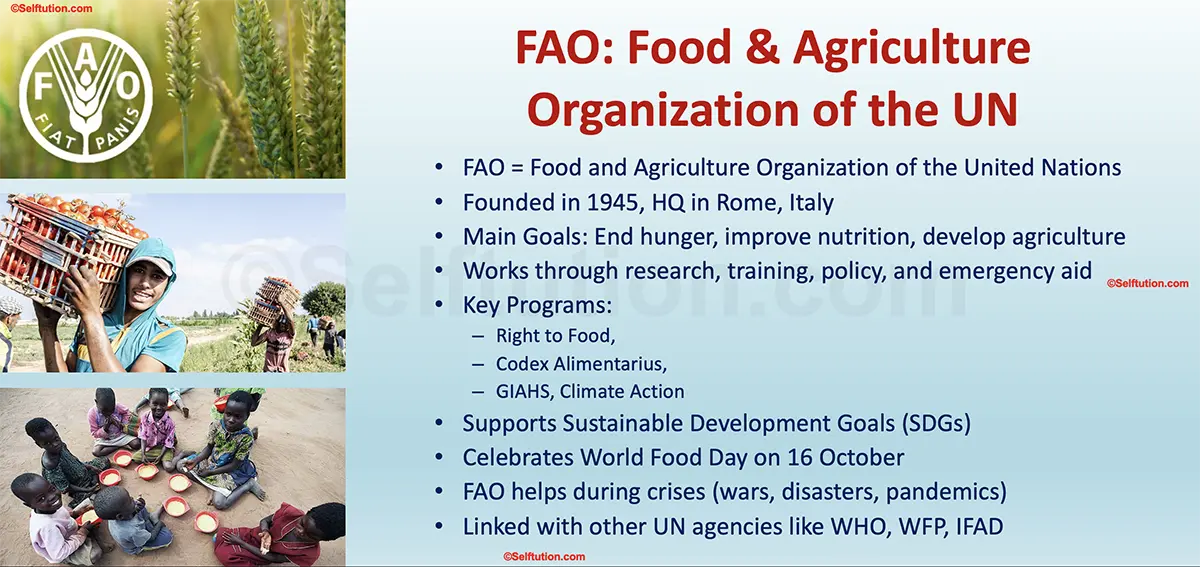
FAO – The Food & Agriculture Organization of United Nations (UN)
History of FAO
- FAO was created on 16 October 1945 in Quebec City, Canada.
- It started just after World War II, when the world faced major food shortages.
- Countries realized that without proper farming and food supply, peace and development would not be possible.
- The Food and Agriculture Organization became the first specialized agency of the United Nations.
- The headquarters of the Food and Agriculture Organization is in Rome, Italy.
Every year on 16 October, the world celebrates World Food Day to honor the creation of the Food and Agriculture Organization.
Why is FAO Important?
The Food and Agriculture Organization is important because food and farming are the basis of human survival. Without enough food:
- People suffer from hunger and malnutrition.
- Countries cannot develop properly.
- Farmers remain poor.
- Conflicts may increase due to a shortage of resources.
FAO provides solutions to these problems. It helps countries to produce food in a safe, fair, and sustainable way.
Goals of FAO
The main goals of the Food and Agriculture Organization are clear and simple:
- End Hunger – Make sure that no person goes to bed hungry.
- Improve Nutrition – Ensure people eat healthy and balanced diets.
- Develop Agriculture – Help farmers improve farming methods.
- Protect Natural Resources – Save water, soil, forests, and fisheries for future generations.
- Support Rural Development – Help rural areas grow and become self-reliant.
These goals are linked with the United Nations Sustainable Development Goals (SDGs), especially SDG 2: Zero Hunger.
How Does FAO Work?
The Food and Agriculture Organization works in many ways to achieve its goals:
1. Research and Knowledge
FAO studies farming problems and shares scientific knowledge with countries. It creates reports and data about agriculture, food security, and climate change.
2. Training and Education
The Food and Agriculture Organization trains farmers, students, and governments. It helps them learn new methods of farming, fishing, and forestry.
3. Emergency Help
During famines, droughts, wars, or natural disasters, FAO provides emergency food and farming support.
4. Policy Making
FAO guides governments to make better policies about farming, food supply, and trade.
5. Partnerships
The Food and Agriculture Organization works with other UN agencies, NGOs, and companies to fight hunger and protect resources.
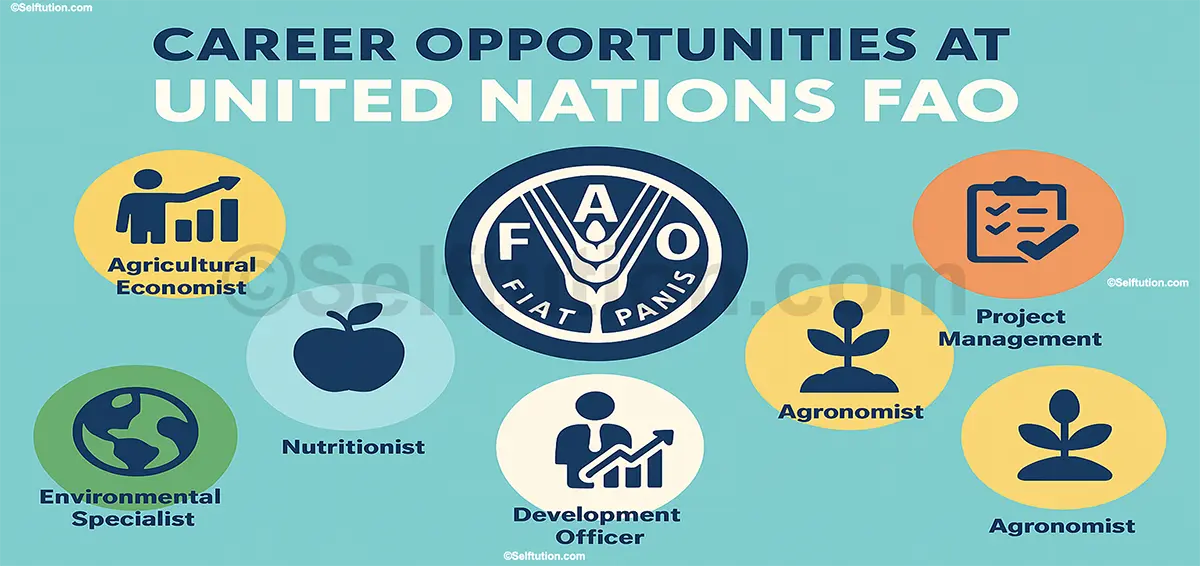
Structure of the Food and Agriculture Organization
The structure of FAO is made up of several parts:
- Conference: The highest governing body of FAO. It meets every two years and includes all member countries.
- Council: Works between the conferences and makes decisions.
- Director-General: The head of FAO who manages all its activities.
- Departments and Divisions: FAO has many departments, such as agriculture, fisheries, forestry, nutrition, and climate.
United Nations FAO Member Countries
The Food and Agriculture Organization is a global organization.
- It has 194 member countries, plus the European Union and Palestine.
- Almost every country in the world is part of FAO.
- This wide membership shows that food security is important for all nations.
Major Programs of FAO
The Food and Agriculture Organization runs many programs across the world. Some of the important ones are:
1. The Right to Food
The Food and Agriculture Organization believes food is a basic human right. It helps countries to make laws so people can access food fairly.
2. The Codex Alimentarius
This is a food standards program run by FAO and the World Health Organization (WHO). It ensures that food is safe, clean, and healthy.
3. Globally Important Agricultural Heritage Systems (GIAHS)
This program protects traditional farming systems that are valuable for culture and the environment.
4. Emergency and Resilience Programs
FAO helps countries hit by wars, droughts, floods, and other disasters. It provides seeds, farming tools, and knowledge to rebuild food systems.
5. Climate Change Actions
The Food and Agriculture Organization guides countries on how to farm without harming the environment. It works for sustainable agriculture.
FAO and Sustainable Development Goals (SDGs)
The United Nations SDGs aim to make the world better by 2030. The Food and Agriculture Organization plays a very important role, especially in:
- SDG 2: Zero Hunger – Ending hunger and malnutrition.
- SDG 12: Responsible Consumption and Production – Using resources wisely.
- SDG 13: Climate Action – Protecting the environment through sustainable farming.
- SDG 15: Life on Land – Conserving forests, soil, and biodiversity.
Achievements of FAO
The Food and Agriculture Organization has made many achievements since its creation:
- Helped reduce hunger in many countries.
- Created international food safety standards.
- Supported farmers with technology and training.
- Fought plant and animal diseases like locust swarms and bird flu.
- Promoted sustainable fishing and forestry.
- Provided data and reports that guide global decisions.
Challenges Faced by the United Nations FAO
Even though the Food and Agriculture Organization has helped millions of people, it still faces big challenges:
- Climate change is affecting farming.
- Population growth is increasing the demand for food.
- Wars and conflicts are destroying food systems.
- Poverty and inequality in rural areas.
- Water shortages and soil degradation.
FAO continues to work hard to solve these issues with the help of its members.
FAO’s Role During Global Crises
The Food and Agriculture Organization becomes very important during global crises. For example:
- During COVID-19, FAO worked to keep food supply chains active.
- During wars, FAO helps farmers to keep producing food.
- During natural disasters, FAO provides seeds, fertilizers, and support to farmers.
The Food and Agriculture Organization and India
India is an active member of FAO. Some of FAO’s work in India includes:
- Supporting programs to improve food security and nutrition.
- Working on projects for fisheries, livestock, and forestry.
- Helping India fight locust attacks and crop diseases.
- Promoting sustainable farming practices.
India has also hosted World Food Day events in collaboration with FAO.
World Food Day and FAO
Every year on 16 October, World Food Day is celebrated. It spreads awareness about hunger and food security. The theme changes every year, but it always highlights FAO’s mission. Schools, governments, and organizations around the world celebrate this day with activities and campaigns.
Connection with Other UN Agencies
FAO is one of the 15 specialized agencies of the UN. It works closely with:
- WHO (World Health Organization) – For food safety and health.
- WFP (World Food Programme) – For emergency food aid.
- IFAD (International Fund for Agricultural Development) – For rural development.
Together, these agencies fight hunger and promote development.
This shows how FAO is linked to the main organs of the United Nations and other agencies that work for peace, development, and human welfare.
Future of the Food and Agriculture Organization
The future of the Food and Agriculture Organization will focus on:
- Using modern technology like artificial intelligence and digital farming.
- Promoting organic farming and eco-friendly methods.
- Helping small farmers earn more.
- Fighting climate change with sustainable solutions.
- Ensuring food is available to all, even in difficult times.
Conclusion
The Food and Agriculture Organization is a key agency of the United Nations. It works to end hunger, improve nutrition, support farmers, and protect the environment. Since 1945, FAO has played a big role in making the world a better place.
The Food and Agriculture Organization reminds us that food is not just something we eat – it is a right, a need, and a path to peace and development. For students and future leaders, learning about FAO is important because food and farming affect every country and every person on Earth.
You may also like…... Types of Chemical Reactions in Chemistry