Difference Between WHICH and THAT with Examples
Master the Key Difference Between Which and That – Simple Rules, Clear Examples & Common Mistakes | Selftution.com
Welcome to Selftution.com – the #1 educational website for easy, accurate learning. Get grammar right with our expert explanations!
So, let’s begin
One of the most common grammar questions in English is about the words “which” and “that.” The difference between “which” and “that” might seem small, but it changes the meaning of a sentence in important ways.
Many people use them interchangeably, but they serve different purposes. Using them correctly can help make your writing clearer, sharper, and more professional.
In this blog post, we’ll explain the difference between “which” and “that” in simple terms, with real examples to help it all make sense.
The Basic Rule
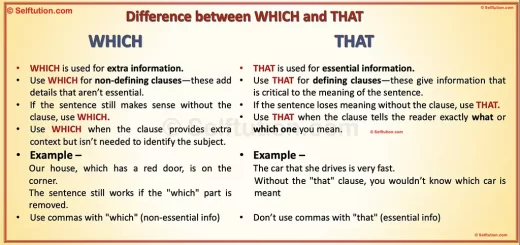
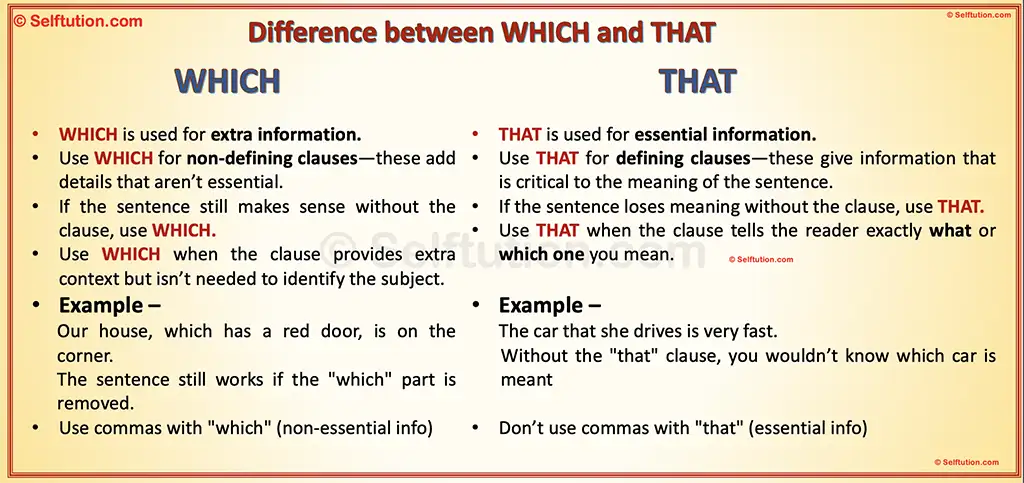
- “That” is used for essential information.
- “Which” is used for extra information.
Let’s dive into what that means.
Defining vs. Non-defining Clauses
Understanding the difference between “which” and “that” begins with knowing the type of clause they introduce.
- Use “that” for defining clauses—these give information that is critical to the meaning of the sentence.
- Use “which” for non-defining clauses—these add details that aren’t essential.
Put simply:
- If the sentence loses meaning without the clause, use “that.”
- If the sentence still makes sense without the clause, use “which.”
Real-Life Examples That Show the Difference Between Which and That
The book that I borrowed from the library is excellent.
- This tells us exactly which book is being talked about. The clause is necessary.
The book, which I borrowed from the library, is excellent.
- This adds extra information about the book; you already know which book is being referred to.
When to Use “That”: Spotting Essential Information
Use “that” when the clause tells the reader exactly what or which one you mean. These clauses define the subject.
Examples:
- The car that she drives is very fast.
- The dress that he bought was on sale.
- The house that has the red door is mine.
Without the “that” clause, you wouldn’t know which car, dress, or house is meant. That’s the core of the difference between which and that.
When to Use “Which”: Adding Helpful but Non-Essential Info
Use “which” when the clause provides extra context but isn’t needed to identify the subject.
Examples:
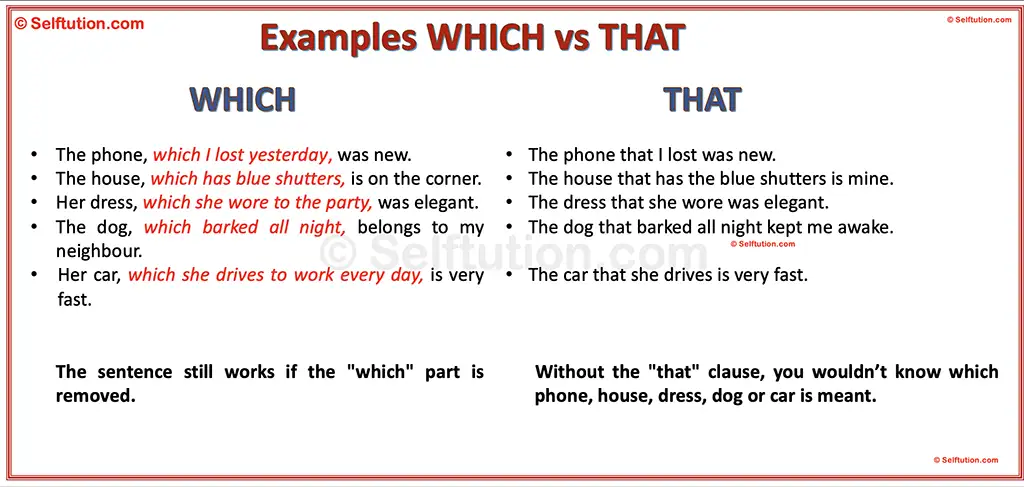
- Her car, which she drives to work every day, is very fast.
- His dress shirt, which he bought on sale, looks expensive.
- Our house, which has a red door, is on the corner.
The sentence still works if the “which” part is removed. That’s a clear difference between which and that in writing.
Examples: Which vs That
The Role of Commas in the Difference Between Which and That
Commas aren’t just punctuation; they signal whether the clause is essential or not.
- Use commas with “which” (non-essential info)
- Don’t use commas with “that” (essential info)
A quick tip: If you pause when reading, a comma – and likely “which” – is the right call.
Mistakes to Avoid When Using Which and That
Mixing up “which” and “that” is a common writing error. It’s usually okay in casual speech, but can be confusing or incorrect in professional writing.
Incorrect: The phone which I lost was new.
Correct: The phone that I lost was new.
Difference Between Which and That about People and Things
- Use “that” or “which” for things.
- Use “who” when referring to people.
Examples:
- The teacher who gave me homework is strict.
- The movie that I watched was exciting.
- The painting, which was over 100 years old, was restored.
A Quick Guide to Remember the Difference
If the clause is essential, use that.
If it’s just an extra detail, use which.
It’s a small rule, but it sharpens your writing instantly.
Final Thoughts:
Learning this difference helps you avoid confusion, write more clearly, and sound more polished. It’s a small detail with a big impact.
Once you’ve practiced spotting the difference, you’ll start using each word with confidence and clarity.
This rule might seem technical at first, but mastering it gives your writing a professional edge. It shows your readers that you pay attention to detail and take care in how you communicate. Whether you’re a student, a business professional, or a casual blogger, using “which” and “that” correctly can elevate your writing.
Keep in mind that even native speakers sometimes get this wrong. But now that you understand the difference, you’re already ahead. Keep practicing, and soon choosing between “which” and “that” will feel completely natural.
You may also like…... Types of Chemical Reactions in Chemistry